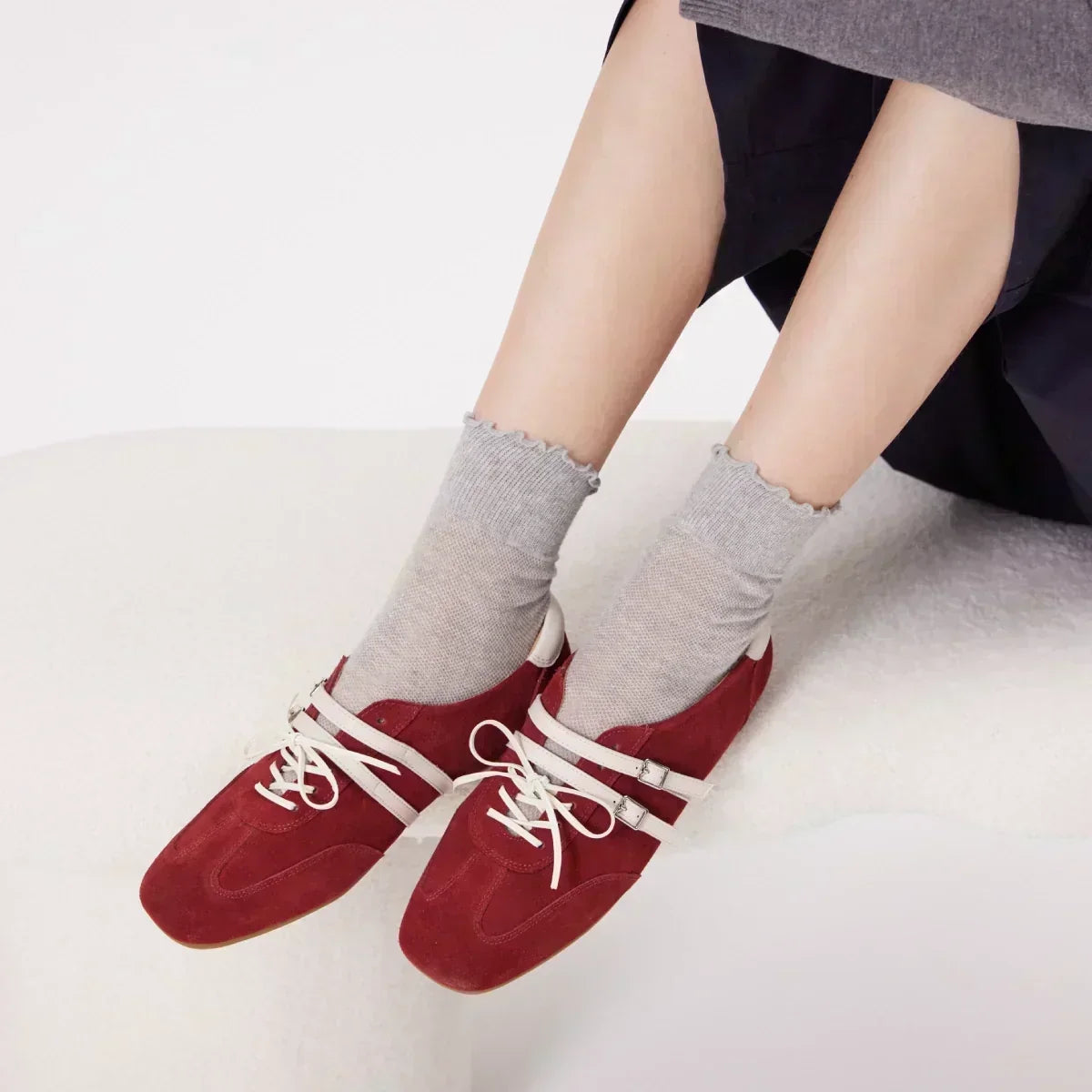
Humidity-Proof Your Shoes: A Singapore Girl's Guide to Suede and Leather Care
One routine doesn't cover both materials
Suede and leather sit in the same shoe cupboard and get treated the same way more often than not, which is part of why so many pairs don't last as long as they should. The two materials want different products and different handling, and getting that wrong is an easy way to ruin a shoe you were only trying to protect. It matters more here than it would somewhere drier: Singapore's humidity gives mistakes more chances to show up as cracking, staining, or mould. Learning how to clean suede shoes properly, and treating leather as its own separate job, is the actual fix.
Know your material first
The single most common mistake is reaching for leather conditioner on a suede shoe. Conditioner is designed to feed oils into smooth leather; on suede's brushed, napped surface it flattens the texture and leaves a stain that won't brush out. If a product page or care label doesn't say, run a finger lightly across the surface: suede has a soft, textured nap that catches slightly, while leather feels smooth and slightly cool. Patent and coated finishes are their own third category, closer to leather in that they wipe clean, but they shouldn't take a conditioner either; a barely damp cloth is usually all they need. Once you know which one you're holding, the actual cleaning gets simple.

How to clean suede shoes
-
Let it dry first. Suede that's picked up dirt or a splash of water should dry completely before you touch it. Working on damp suede spreads the mark instead of lifting it.
-
Brush in one direction. A dedicated suede brush lifts dirt and restores the nap. Short strokes in the same direction work better than scrubbing back and forth.
-
Use a suede eraser on stains. For marks that won't brush out, a suede eraser (or a clean pencil eraser in a pinch) lifts the stain without wetting the material.
-
Skip water and household cleaners. Water is what actually ruins suede, not dirt. If a stain won't lift with brushing and an eraser, stop rather than reaching for anything wet.
No suede brush or eraser on hand? A fresh grease or oil mark can be sprinkled with a little baking soda, left to absorb overnight, then brushed away once dry, which is a genuine fix for that specific kind of stain rather than a cure-all. Vinegar and other household liquids come up often in searches for suede fixes, but they're a risk rather than a reliable method: they can leave a water mark of their own. If brushing, an eraser, and a dry absorbent like baking soda don't clear a mark, that's the point to take it to a proper cleaner rather than experiment further.
How to care for leather shoes
-
Wipe down after every wear. A soft, dry cloth removes surface dust before it has a chance to sit in the grain.
-
Clean properly every few weeks. For shoes that you wear on a daily basis, a leather-formulated cleaner lifts dirt without stripping the leather, applied in small sections with a soft cloth and left to dry fully before the next wear.
-
Condition after cleaning, not instead of it. Conditioning replaces the oils that the cleaning removes, keeping the leather supple rather than letting it dry out and crack over time.
-
Let damp pairs dry naturally. Away from direct heat or sun, which can dry leather out too fast and cause it to stiffen or crack.

Singapore's humidity problem: storage that actually works
Singapore's climate is genuinely part of the problem, not just a line to add local flavour. Consistent heat and moisture in the air give mould more chances to take hold in a closed shoe cupboard, and a pair that's fine one month can come out spotted the next if it's been sitting untouched.
A few habits make the real difference:
-
Silica gel packets inside each pair, replaced every few months once they've absorbed as much moisture as they can hold.
-
Ventilation over a sealed cupboard. A closed, airtight space traps humidity; even leaving the cupboard door open occasionally, or using a dehumidifier or dry cabinet for pairs you wear less often, helps more than sealing shoes away.
-
Check stored pairs every few weeks, not just when you reach for them. Mould caught as a light surface bloom is a far smaller job than mould left to set, which is the whole point of looking rather than waiting.
Mould has started. Can the shoe be saved?
Usually yes, if you catch it as a surface bloom rather than a dark stain that's already set into the material. Mould on a shoe here is almost always a storage problem surfacing late, not a sign the pair is finished.
Take the shoe out of the cupboard first, and ideally outside. Brushing mould off inside a wardrobe just moves the spores onto whatever's sitting next to it, which is how one damp pair becomes three.
Let it dry completely, then brush the bloom away dry, with a suede brush on suede or a soft cloth on leather. Do this before anything damp touches the shoe: dry brushing lifts mould off the surface, while wiping it wet presses it into the grain or flattens it into the nap.
For whatever's left, a 50/50 mix of white vinegar and water on a cloth, wrung out until it's barely damp, is the accepted fix. This is the one job where vinegar earns its place. It's a poor choice for an ordinary suede stain, where it leaves a water mark of its own, but on mould it does something plain water can't. Work in small sections, then let the pair air dry fully, away from direct heat, before it goes anywhere near a cupboard again.
If the mould has darkened the leather or matted the nap flat, that's past a home fix. A cobbler or a specialist cleaner is a better call than a stronger chemical.
A few habits that undo the rest of this
-
Sealed shoeboxes and plastic bags. They feel protective, but an airtight box traps whatever moisture the shoe went in with, which is closer to incubating mould than preventing it. Keep the lid slightly open or swap to a fabric bag if you're storing the original box.
-
Two-day rule. A day of wear leaves a shoe damp with sweat even if it doesn't look it. Give leather and suede at least a day to air out fully before the next wear.
-
Polishing over dirt. Polish or cream applied straight onto a dusty or dirty surface seals the dirt into the grain instead of protecting it. Clean first, every time, even when it's tempting to skip straight to the shine.
Shop the collection
Ready to build the routine in? Browse the shoe care collection for the cleaner and the essentials that go with it. If it's the shoes themselves you're after, the suede shoes edit is where most of this routine gets put to work. For more on keeping shoes in good shape through daily wear, see All-Day Work Shoes and Essential Workwear Shoes on The Edit.
Shop The Look